This post is pulled from a recent coaching call where we talked about what to do when the work suddenly feels harder than expected. I broke down why heavy days don’t automatically mean something is wrong, and how staying connected to the bigger picture matters more than how a single day feels.
The short clip below comes from that conversation. I was sharing a real example from my own training, where several runs in a row felt awful, doubt started creeping in, and then everything made sense once my period showed up!
Here’s an overview of what else we talked about during the call.
The Work Can Feel Crappy and Still Be Exactly Right
There are days when the work feels off.
Not catastrophic. Not dramatic. Just heavy. Tight. Slower than usual. Harder than it “should” be based on how things have gone before.
Last week, every run felt harder than the one before.
I finished them, didn’t cut anything short, and still found myself looking at my pace thinking, What is going on?
I had been on point with my training. Nothing had changed. And yet my body felt like it was pushing through mud…
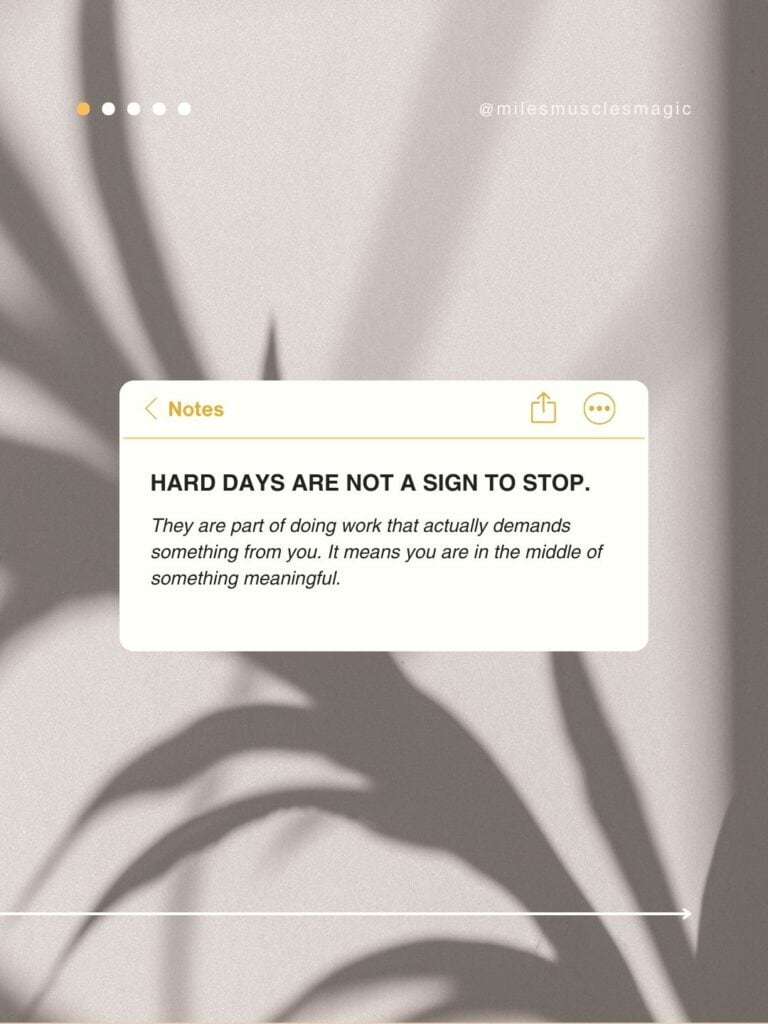
That’s usually when people start assuming something is wrong. They question their training. Their plan. Their discipline. Their body.
They zoom in on a single day and let it outweigh weeks or months of consistency.
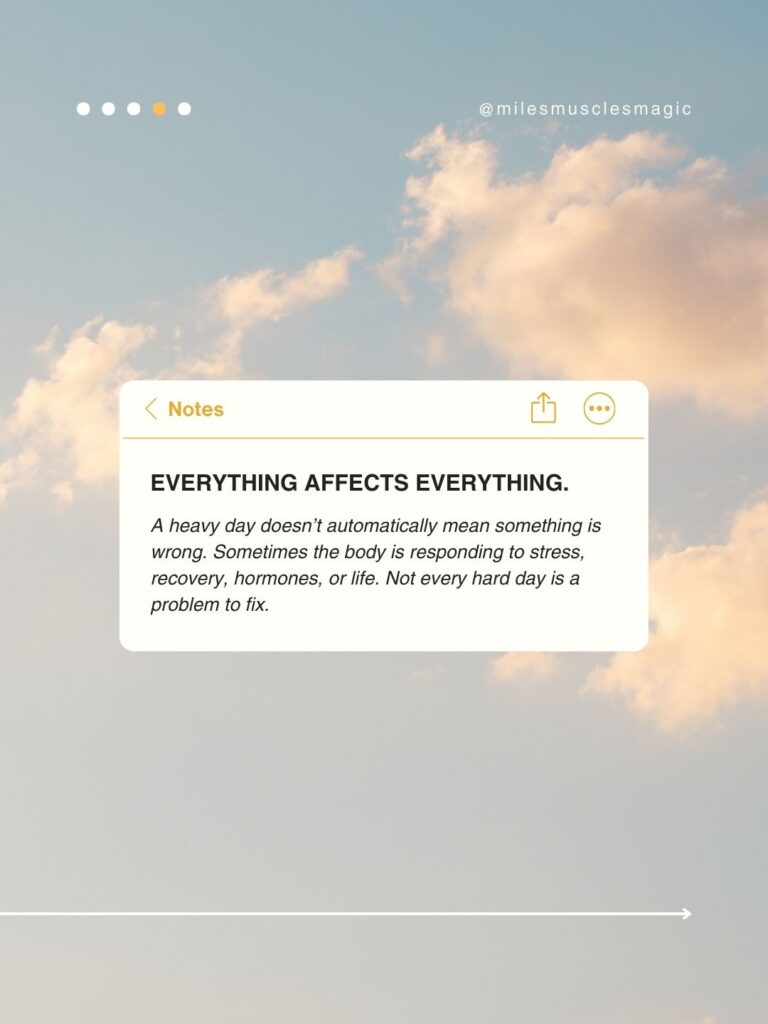
But a heavy day doesn’t automatically mean you’re off track. More often, it just means you’re human.
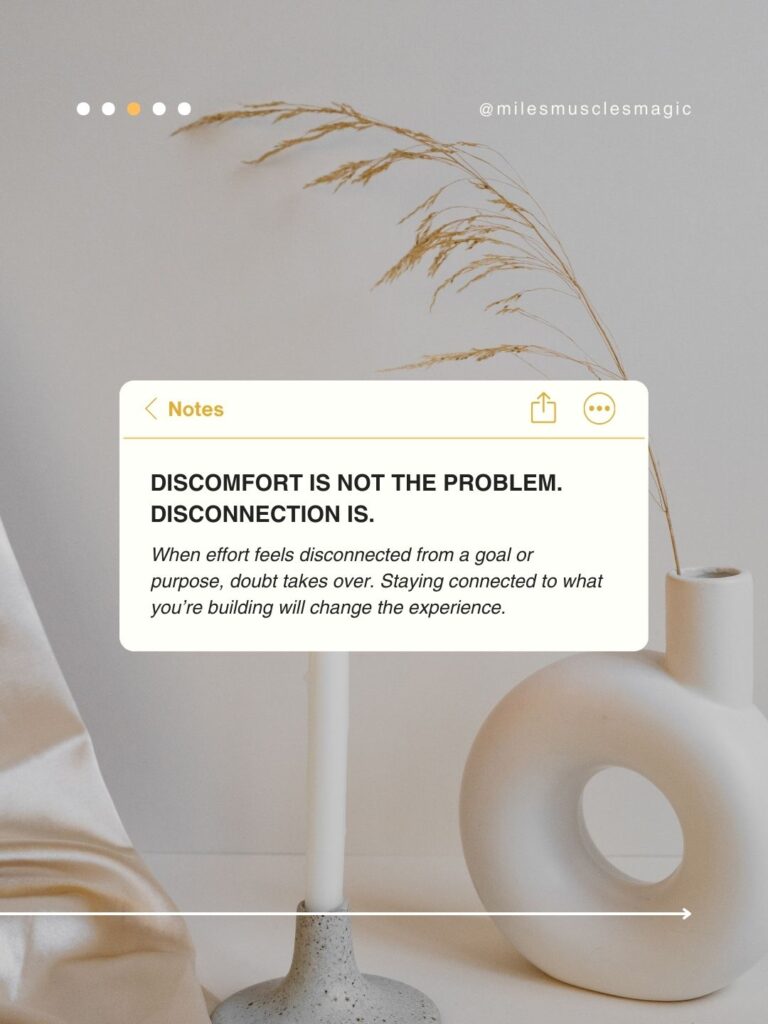
The mistake isn’t having hard days. The mistake is letting a single uncomfortable experience disconnect you from the bigger picture.
Nothing Was Broken. Everything Was Connected.
A few days later, everything made sense when I got my period.
Nothing had gone backwards and nothing had been lost. My body was responding to real variables: hormones, timing, stress, recovery.
Everything affects everything, whether we want it to or not.
The truth is, nothing shows up the exact same way every day, especially not when you’re doing real work that actually demands something from you.
The Bigger Picture Saved Me
What helped me stay in it during that week was staying connected to what I’m working toward. Those runs were not standalone efforts. They were part of a larger training block and a clear end goal, and that context mattered more than how any single day felt.
When you remember that the action you are taking today is connected to something beyond the moment, it changes the way you respond to discomfort.
A hard workout or an off day stops feeling like a problem that needs to be fixed and starts feeling like part of the process.
That connection makes it much harder to give yourself an out, because opting out no longer makes sense when you understand how today fits into the bigger picture.
Let the Hard Days Exist
Staying connected to the bigger picture does not mean ignoring how the work feels or pretending that hard days are easy.
It means recognizing that difficulty does not automatically disqualify the work you are doing.
So get clear on what you are actually building and working towards. That’s a powerful way to let hard days exist without letting them define the entire process. The work does not have to feel good to be meaningful, and it does not have to feel strong to still be effective. The job is to stay in the work long enough for the bigger picture to matter.